For decades, the concept of resurrecting extinct creatures remained confined to science fiction novels and Hollywood blockbusters. However, a groundbreaking scientific achievement has recently blurred the line between fantasy and reality. In a landmark study published in a leading peer-reviewed journal, an international team of geneticists and biotechnologists announced that they have successfully revived functional DNA strands extracted from ancient animal remains. This monumental breakthrough not only opens new doors for understanding evolutionary biology but also reignites the ethical and practical debate surrounding “de-extinction.” By breathing life into genetic material thousands of years old, scientists have proven that the past is no longer as inaccessible as we once believed.
The Historic Milestone: What Was Achieved?
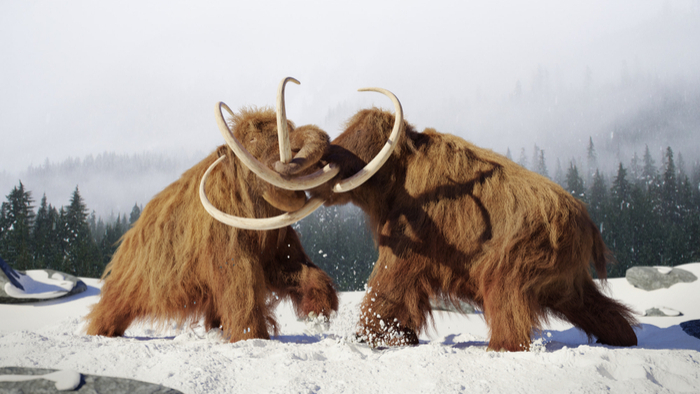
The research team focused on well-preserved specimens discovered in the perpetually frozen soils of northeastern Siberia. Using advanced extraction techniques that minimized contamination from modern bacteria or fungi, they isolated tiny fragments of DNA from bone marrow and soft tissue samples. These fragments, belonging to a steppe bison dated to approximately 18,000 years ago and a woolly mammoth estimated to be over 25,000 years old, were initially degraded and fragmented a common challenge when working with ancient genetic material.
Where previous efforts only managed to sequence and analyze ancient DNA, this new study went several critical steps further. The scientists employed a novel technique called “Paleo-DNA Reassembly and Activation” (PDRA). This method combines high-throughput sequencing with sophisticated molecular engineering to identify viable genetic sequences, repair chemical damage accumulated over millennia, and then insert the fully reconstructed genes into a modern host cell line. Remarkably, the revived DNA segments successfully directed protein synthesis, meaning the ancient genes became functionally active again.
How Ancient DNA Degrades Over Time
To fully appreciate this achievement, it is essential to understand why reviving ancient DNA is so extraordinarily difficult. Unlike the fictional amber-preserved dinosaur DNA in Jurassic Park, real-world ancient DNA faces relentless chemical decay. After an organism dies, several destructive processes begin immediately:
A. Hydrolysis – Water molecules attack the bonds between nucleotides, causing DNA strands to break into ever-shorter fragments. Within a few thousand years, most DNA degrades into pieces shorter than 100 base pairs.
B. Oxidation – Reactive oxygen species, naturally present in cells and the environment, chemically modify bases like guanine and thymine. These modifications can cause mutations or stop replication enzymes altogether.
C. Crosslinking – Proteins and other organic molecules form covalent bonds with DNA, creating insoluble complexes that render genetic information unreadable.
D. Microbial Contamination – Over centuries, soil bacteria and fungi infiltrate remains, introducing their own modern DNA. Distinguishing authentic ancient sequences from contaminants is a persistent challenge.
Given these obstacles, the successful revival of functional ancient DNA represents a triumph of modern molecular biology over the relentless forces of chemical entropy.
Step-by-Step Methodology: From Permafrost to Protein
The research protocol followed by the team was meticulous and multi-phased. Below is a simplified breakdown of their process:
A. Sample Collection and Preservation
Specimens were excavated from the Batagaika Crater, a massive thermokarst depression in Siberia. Immediately upon recovery, samples were flash-frozen in liquid nitrogen to prevent any further enzymatic or chemical degradation.
B. Contamination Screening
Each sample underwent rigorous surface sterilization using ultraviolet radiation and chemical washes. Technicians then screened for modern DNA using quantitative PCR (qPCR) targeting common soil bacteria. Only samples with negligible contamination proceeded.
C. DNA Extraction and Purification
Using a silica-based spin-column method optimized for short, damaged fragments, the team extracted total DNA. This was followed by a specialized enzymatic treatment that removed oxidized bases and repaired some crosslinks a crucial step for later activation.
D. High-Throughput Sequencing and Assembly
Millions of short DNA reads were generated using Illumina NovaSeq technology. Custom bioinformatics algorithms mapped these reads to reference genomes of modern relatives (e.g., African elephant for mammoth, American bison for steppe bison). Overlapping fragments were assembled into longer contiguous sequences (contigs).
E. Damage Assessment and Correction
The assembled ancient sequences were analyzed for characteristic damage patterns especially deamination of cytosine to uracil, which sequencing machines read as thymine. Through a combination of computational error correction and biochemical restoration, researchers reconstructed the most likely original gene sequences.
F. Gene Synthesis and Functional Testing
Synthesized copies of fully reconstructed ancient genes (e.g., those responsible for hemoglobin oxygen binding and hair follicle keratin structure) were inserted into expression vectors. These vectors were then transfected into laboratory-cultured human embryonic kidney (HEK293) cells and mouse fibroblast cells.
G. Revival Confirmation
Within 48 hours of transfection, the host cells began producing proteins exactly as coded by the ancient DNA. Mass spectrometry confirmed that the proteins were structurally identical to predictions based on the ancient genetic code. Most notably, the revived mammoth hemoglobin protein exhibited cold-adaptive properties—binding more tightly to oxygen at low temperatures—consistent with prior theoretical models.
Why This Breakthrough Matters for Science
The successful revival of ancient animal DNA goes far beyond satisfying human curiosity. It provides tangible, functional data that can reshape multiple scientific disciplines:
A. Evolutionary Biology
Previously, scientists could only infer the function of extinct species’ genes by comparing their sequences to modern relatives’ genomes. Now, researchers can directly measure how ancient proteins performed. This allows us to test hypotheses about adaptation, such as how woolly mammoths developed their dense fur, small ears, and hemoglobin capable of functioning in freezing temperatures.
B. Conservation Genetics
Understanding how extinct species responded to past climate shifts may inform current conservation strategies. By reviving genes from animals that thrived during interglacial or glacial periods, scientists can identify which genetic variants confer resilience to temperature change, disease, or habitat loss. These variants could potentially be engineered into endangered populations to improve their survival odds.
C. Understanding Extinction Dynamics
Not all extinctions are equal. Some species died out due to overhunting, others due to habitat loss, and many due to climate shifts. By comparing functional DNA from multiple individuals across different time horizons, scientists can determine whether a species was already genetically declining before its final disappearance—a warning sign for today’s threatened fauna.
D. Biotechnology and Medicine
The techniques developed for repairing and reviving ancient DNA have immediate applications in modern medicine. Many cancers and age-related diseases involve DNA damage similar to that suffered by ancient samples. Methods for repairing oxidative damage and crosslinks in ancient DNA could translate into novel therapies for human genomic instability disorders.
 Major Ethical and Practical Considerations
Despite the excitement, this achievement has sparked intense ethical discussions. The ability to revive ancient DNA is not the same as bringing back a whole living, breathing animal, but it is a critical step in that direction. Several key concerns have been raised:
A. Welfare of De-Extinct Organisms
Even if a complete mammoth or bison genome were revived and used to gestate a cloned embryo in a modern surrogate mother, there is no guarantee that the resulting animal would live a pain-free, normal life. It might suffer from unknown congenital defects or lack the social learning needed to behave as a member of its species. Ethicists argue that creating an animal without a suitable environment or herd is inherently cruel.
B. Ecological Risks
Suppose de-extinction becomes fully possible. Where would resurrected species live? Their original habitats have changed dramatically over thousands of years. Introducing a mammoth into modern Siberia could disrupt existing ecosystems, outcompete native herbivores, or introduce ancient pathogens that modern immune systems cannot handle. Conversely, the mammoth itself might lack immunity to contemporary diseases.
C. Resource Allocation
Critics question whether the millions of dollars needed for de-extinction research might be better spent conserving currently endangered species. With over one million species at risk of extinction today, some argue that “bringing back the dead” is an irresponsible distraction from preventing living species from vanishing.
D. Regulatory Gaps
Currently, no international laws specifically govern the revival, ownership, or release of de-extinct organisms. Would a revived mammoth belong to the country where its DNA was found? Would it be protected as an endangered species, or treated as an invasive species? These legal questions remain unanswered.
Limitations and Future Research Directions
It is crucial to recognize what this breakthrough did not achieve. The scientists revived only isolated genes, not entire genomes. No whole animal was created, nor are such creations imminent. Significant hurdles remain:
A. Genome Completeness – Even the best-preserved ancient specimens yield genomes that are highly fragmented and missing large sections. Reconstructing a full, functional genome would require filling in thousands of gaps with synthetic DNA or sequences from modern relatives—creating a hybrid, not a pure ancient animal.
B. Epigenetic Information – DNA alone does not determine an organism. Epigenetic modifications, which control which genes are active in which tissues, are largely lost after death. Without this information, a cloned ancient animal might develop incorrectly or fail to express essential genes at the right times.
C. Surrogate Gestation – For large extinct animals like mammoths, no perfect surrogate exists. Elephants are the closest living relatives, but their pregnancy lasts 22 months, and even minor genetic incompatibilities could lead to miscarriage. The ethical and technical challenges of elephant surrogacy are substantial.
D. Microbiome and Symbionts – A healthy animal depends on trillions of symbiotic bacteria in its gut, skin, and respiratory tract. These ancient microbiomes are entirely lost. Modern surrogates would pass on their own microbial communities, potentially altering the resurrected animal’s digestion, immunity, and behavior.
Moving forward, the research team plans to focus on reviving entire gene networks rather than single genes. They also aim to test whether ancient regulatory DNA—the “switches” that turn genes on and off—can function in modern cells. Parallel projects are attempting similar revivals from cave lion, giant ground sloth, and moa bird specimens.
Practical Applications Already Emerging
While the full de-extinction of an animal remains years or decades away, the revival of ancient DNA has already yielded practical benefits:
Example A – Improving Livestock Cold Tolerance
By studying the revived cold-adaptation genes from woolly mammoths and steppe bison, agricultural biotech firms are exploring whether similar edits could help cattle and water buffalo thrive in northern latitudes. This could reduce livestock mortality during harsh winters and expand farming into previously marginal lands.
Example B – Bioremediation
Ancient horses and camels that lived in the Arctic during interglacial periods possessed unique digestive enzymes for breaking down tough, low-quality plant matter. Reviving and expressing these enzymes in bacteria or yeast could produce industrial enzymes useful for biofuel production from agricultural waste.
Example C – Biomaterials
Keratin genes from ancient woolly rhinoceroses encode exceptionally strong, flexible hair fibers. Synthetic versions of these keratins are being tested for use in biodegradable fishing nets and high-strength surgical sutures.
Example D – Drug Discovery
Some extinct animals produced unique antimicrobial peptides—small proteins that kill bacteria—as part of their immune systems. Reviving these peptides offers a potential new source of antibiotics at a time when modern bacteria are rapidly developing resistance to existing drugs.
 Public Perception and Media Impact
Not surprisingly, the news of successfully revived ancient DNA has captured global headlines. Social media platforms buzzed with comparisons to Jurassic Park, and several news outlets ran inaccurate stories claiming scientists had “brought back a mammoth.” In reality, no living mammoth has been created. However, the public’s fascination underscores a deep, cross-cultural desire to witness lost worlds.
This media attention has a double-edged effect. On the positive side, increased public interest can drive funding and policy support for genetic research. On the negative side, exaggerated claims can lead to disappointment and distrust of science when de-extinction fails to materialize quickly. The research team has been careful to emphasize that reviving a single gene is not reviving an animal, but nuance is often lost in sensational reporting.
Conclusion: A New Chapter in Genetic History
The successful revival of ancient animal DNA from a steppe bison and woolly mammoth marks a historic milestone in paleogenetics and biotechnology. For the first time, scientists have taken genetic material locked in permafrost for tens of thousands of years, repaired its chemical damage, and watched it produce functional proteins inside living cells. This achievement proves that the past is not permanently silent—it can be made to speak again through the language of molecular biology.
However, this power comes with profound responsibility. As we gain the ability to revive ancient genes, and eventually perhaps entire animals, we must ask ourselves difficult questions: Should we bring back extinct species just because we can? Who will care for them? And what lessons from their extinction might we still be ignoring today?
The answers will not come from laboratories alone. They require input from ethicists, ecologists, legal scholars, indigenous communities, and the global public. One thing is certain: the line between the living and the extinct has just become a little more blurred. And as science continues to push that boundary, humanity must decide how and if we truly want to turn back the clock on evolution.