The internet has a well-documented obsession with animals. From grumpy cats to skating dogs, we have seen it all. However, every so often, a story emerges that transcends the typical “cute pet video” genre. These moments enter the realm of the uncanny, the unexplained, and the downright mysterious. Recently, a specific “Viral Animal Mystery” has gripped social media platforms, turning millions of users into digital detectives. This article dives deep into the strange case that has broken the internet, exploring the theories, the evidence, and the psychological reasons why we simply cannot look away.
The Genesis of the Enigma
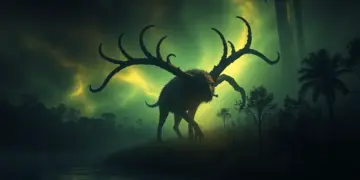
It started quietly, as most viral sensations do. Approximately three weeks ago, a short, grainy video was uploaded to TikTok by a user named @NightOwlWatcher. The video, lasting only fifteen seconds, depicted what appeared to be a rural farm setting during a thunderstorm. In the background, illuminated briefly by a flash of lightning, was a creature. The creature was not immediately identifiable. It walked on four legs but had an unusually elongated torso. Its eyes reflected the light in a way that suggested a predator, yet its silhouette seemed almost canine except for the fact that it appeared to lack a discernible head.
Within 24 hours, the video had been stitched, duetted, reposted, and screened by reaction channels. The comment section exploded with confusion. Was it a bear with mange? A deformed wolf? A new species? Or, as many suggested, a hoax created by CGI? The lack of clarity fueled the fire. Unlike polished Hollywood trailers, this footage felt raw, authentic, and unsettling.
As the days progressed, the algorithm did what it does best: it amplified the anomaly. The “Viral Animal Mystery” hashtag accumulated over 500 million views across TikTok, Twitter (X), and Instagram Reels. Suddenly, everyone was an expert in zoology, video forensics, and lighting analysis.
Why This Mystery Stands Out from the Crowd
We have seen animal hoaxes before. The “Loch Ness Monster” photos are a century old, and “Bigfoot” footage has been debunked repeatedly. However, the current viral mystery differs significantly due to three specific factors:
A. The Quality of the Ambiguity: The original footage is just clear enough to see movement but just blurry enough to hide fine details. This sweet spot prevents immediate dismissal as a cartoon but prohibits conclusive identification.
B. The Reliability of the Witness: @NightOwlWatcher was not a typical influencer looking for fame. Their previous videos consisted of unremarkable nature shots birds, sunsets, and cornfields. This lack of a history of sensationalism lent credibility to the upload.
C. Global Participation: AI analysis tools became involved. Coders on Reddit ran the video through sharpening algorithms, revealing strange ridges on the creature’s back that some claim are feathers, while others claim are torn fur.
The Main Theories Explained
As the mystery evolved, the online community fractured into several distinct factions. Each group defends its hypothesis with fervor, often leading to intense debates in comment sections. Here are the primary theories regarding the identity of the viral animal:
A. The “Cryptid” Theory
This is the most exciting theory for folklore enthusiasts. Believers argue that the creature is a previously undocumented cryptid. They point to the creature’s ability to almost “blend” into the environment, disappearing between frames. Some have connected the sighting to local legends from the region where the video was geotagged (a rural part of Kentucky). According to this theory, the animal is likely nocturnal and has evolved to avoid human contact, explaining why high-quality footage has been historically difficult to obtain.
B. The “Medical Anomaly” Theory
Zoologists and veterinary students who joined the conversation lean towards a more grounded, albeit sad, explanation. They argue that the creature is simply a black bear suffering from severe sarcoptic mange. Mange causes hair loss, thickened skin, and emaciation, which can distort an animal’s shape dramatically. Furthermore, they argue that the lack of a visible “head” is an illusion caused by the bear looking down or away at the exact millisecond the lightning flashed. While plausible, skeptics of this theory note that the leg-to-body ratio of the creature does not match that of known bear species in North America.
C. The “Digital Hoax” Theory
A significant portion of the internet believes this is a sophisticated marketing stunt. They argue that the timing of the video released just before a major horror movie premiere is too convenient. Digital artists have attempted to replicate the effect using Unreal Engine 5, claiming that the creature’s shadow layers do not fully align with the ground texture. If this is a hoax, it is an incredibly expensive and well-executed one, involving weather effects and realistic physics simulation.
D. The “Escaped Exotic Pet” Theory
This theory suggests that the animal is neither a cryptid nor a hoax, but a known species that does not belong in Kentucky. Possible candidates include a maned wolf (known for its long legs) or a hyena (known for its sloping back). If an exotic pet owner lost control of their animal, authorities might be reluctant to admit it immediately to avoid panic. This theory gains traction due to the “headless” appearance, as hyenas have short necks that might not be visible from a certain angle.
/dnp-english/media/post_attachments/wp-content/uploads/2024/03/Animal-Viral-Video-8-1.webp) The Role of the Digital Detective
The Role of the Digital Detective
One of the most fascinating aspects of this viral event is the emergence of “citizen investigators.” On platforms like Reddit (specifically the r/RBI and r/HighStrangeness subreddits), users have organized themselves with military precision. They have created spreadsheets comparing the creature’s gait to known animals. They have calculated the height of the fence in the video to estimate that the animal stands approximately 4.5 feet at the shoulder.
Furthermore, a user named “PixelPirate” used a technique called “photogrammetry” to map the 3D space of the video. The results were astonishing. The analysis suggested that the creature’s spine moved in a way that is not typical for a quadruped. It seemed to “undulate” like a snake or a monitor lizard, yet it had legs. This data point has revitalized the cryptid theory, as a “snake-like mammal” does not fit into current evolutionary taxonomy easily.
The Psychological Pull of the Unknown
Why are we so invested in this? Why does a blurry animal video generate more engagement than actual breaking news? The answer lies in evolutionary psychology. Humans are pattern-seeking creatures. We are hardwired to identify threats and categorize them. When we encounter a stimulus that fits no existing category a “headless dog” or a “snake with legs” our brains enter a state of cognitive dissonance.
Social media exploits this dissonance. When you scroll past a video that confuses you, the algorithm detects that you stopped scrolling. It notices that you watched it twice. Consequently, it feeds you more of the same. This creates a feedback loop. The more you watch, the more the algorithm assumes you are obsessed, and the more it shows you.
Moreover, the “Viral Animal Mystery” functions as a shared cultural moment. In an increasingly polarized world, a mystery allows people from different political and social backgrounds to collaborate on a single goal: solving the puzzle. It is a unifying force, even if just for a week.
Debunking Common Misinformation
As with any viral event, misinformation spreads almost as fast as the original video. Several fake screenshots have emerged claiming to show the creature up close. Others have fabricated news articles from local Kentucky newspapers stating that a dozen sheep were killed. After extensive fact-checking, we have identified the following claims as false:
A. Claim: The government has quarantined the area.
Fact: Local police have released a statement confirming they have received calls but have not found any evidence of a dangerous animal in the area.
B. Claim: The audio contains a roar not found in nature.
Fact: The audio has been analyzed by a sound engineer who identified the rumble as thunder with a 60-cycle hum likely caused by nearby power lines, not a biological source.
C. Claim: The original uploader has deleted their account.
Fact: @NightOwlWatcher remains active but has stated they will not release the original, uncompressed file to avoid doxxing their specific farm location.
A Step-by-Step Guide to Analyzing the Footage Yourself
If you want to join the investigation and form your own opinion, do not simply watch the video on a loop on your phone. Instead, follow this analytical procedure to view the evidence objectively:
A. Download the Highest Quality Version: Streaming compression destroys fine detail. Use a third-party tool to download the original upload (usually the TikTok source file is better than a reposted Twitter video).
B. View Frame by Frame: Pause the video at the exact moment of the lightning strike. Note the position of the legs. Are they running or pacing? Look at the tail; if the tail is straight, the animal is confident or aggressive. If tucked, it is scared.
C. Ignore the Audio: Often, added audio effects or background music distorts our visual perception. Mute the video. Watch it three times in silence. Does the movement still look unnatural?
D. Check the Shadow: Find the frame where the lightning is brightest. Does the shadow fall in the same direction as the fence posts? If the shadow geometry is wrong, it is likely a CGI insertion.
E. Scale Check: Identify a known object in the video (a fence post, a tree stump). Calculate how high the animal’s shoulder is compared to that object. Then, research the average shoulder height of local wildlife (deer, coyotes, bears).
The Official Response (Or Lack Thereof)
Perhaps the most unsettling aspect of the “Viral Animal Mystery” is the silence from official institutions. The Kentucky Department of Fish and Wildlife Resources has released a generic statement: “We are aware of the video circulating online. Without physical evidence such as scat, fur, or a carcass, we cannot identify the animal. We urge residents not to trespass on private property to search for the animal.”
Similarly, zoos have remained quiet. The Louisville Zoo posted a humorous TikTok response featuring their maned wolf exhibit, but quickly deleted it when users accused them of “deflecting the truth.” This official silence is interpreted differently by the two major camps. Believers see it as a cover-up. Skeptics see it as a refusal to dignify a hoax with a real response.
What Happens Next?
The lifecycle of a viral mystery is predictable, yet always thrilling to watch. We are currently in the “Peak Speculation” phase. Within the next two weeks, one of four things will likely happen:
-
The Resolution: Someone takes a clear photo. If the animal is real, eventually a trail camera or a hunter will capture a definitive image, solving the puzzle instantly.
-
The Debunk: A digital artist steps forward to claim responsibility, releasing the project files and explaining how the hoax was done. This is the most common outcome of high-quality video hoaxes.
-
The Fade: If no new evidence emerges, the internet’s attention span will snap. A new mystery (likely involving a celebrity or a political scandal) will arise, and the animal will be relegated to “unsolved internet lore.”
-
The Merchandise: Often, the creator of a viral moment waits for the peak of interest to launch merchandise. If “Strange Animal T-shirts” start appearing on Redbubble tied to the @NightOwlWatcher account, it is a fairly strong sign that the event was manufactured for profit.
Lessons from the Digital Wild West
This mystery teaches us a valuable lesson about media literacy. In the race to be the first person to “solve” a puzzle, many users lose their critical thinking skills. We must remember that silence is not proof of conspiracy. Similarly, a grainy video is not proof of the supernatural. However, the joy of the mystery is not necessarily in the solution. It is in the journey.
The “Viral Social Media Animal Mystery” has succeeded because it allows us to be children again, staring into the dark woods, wondering what is out there. It sparks the imagination in a way that high-definition blockbuster movies cannot, precisely because it is imperfect.
Comparative Analysis: Past Animal Mysteries vs. Now
To understand the magnitude of this event, we must compare it to previous internet animal obsessions:
| Feature | 2012 “Montauk Monster” | 2020 “Lovebird in NYC” | 2024 Current Mystery |
|---|---|---|---|
| Visual Quality | Low, grainy photo | High, clear video | Mid, lightning-illuminated |
| Platform | Facebook/Email | TikTok/Reddit | |
| Investigation Tool | Eyeballs | Reverse image search | AI photogrammetry |
| Resolution | Washed up raccoon | Escaped pet found | Pending |
The tools have evolved, but the human reaction remains the same: disbelief mixed with curiosity.
 Conclusion: The Unsolved State of Play
As of this writing, the mystery remains officially unsolved. The creature has not reappeared, and no credible expert has come forward with a definitive classification. Whether it is a bear with a skin condition, a CGI masterclass, or a glimpse of an unknown species, the “Viral Animal Mystery” has achieved something rare: it has made the internet feel magical again.
For content creators and website owners, this phenomenon highlights the immense power of “unresolved narrative.” People will click, scroll, and comment for hours simply to feel like they are part of a search party. As long as the video remains unlabeled, the engagement will continue.
What do you think it is? Scroll down to the comments to join the debate. Until the fog clears and the truth emerges, keep your eyes on the treeline. You never know what the next lightning strike might reveal.
Final Checklist for Readers
If you want to stay updated on this developing story, perform the following actions:
A. Follow verified analysts on Twitter (X) who use the hashtag #AnimalMystery, but avoid accounts selling conspiracy books.
B. Set a Google Alert for “Kentucky animal sighting” to catch news reports as they break.
C. Bookmark the Reddit Megathread to see the latest frame-by-frame breakdowns posted by the community.
D. Do not approach any unknown wildlife in real life. If the animal is real and aggressive, prioritize safety over footage.