When we think of aging, most people imagine a human lifespan of 70, 80, or perhaps 100 years. But in the animal kingdom, time moves at a completely different pace. Some creatures have silently witnessed centuries of human history, surviving wars, climate shifts, and the rise and fall of empires. The question is: what is the oldest animal ever found alive? The answer is not as simple as naming one single creature. Instead, scientists have discovered several record-breaking animals that challenge our understanding of life, death, and biological time. This article explores the oldest animal ever found alive, from a 500-year-old clam to a shark that may have been swimming since the 1600s. Prepare to have your perception of age transformed forever.
A. Defining “Oldest Animal Ever Found Alive”
Before diving into specific species, it is crucial to define what “oldest” means in this context. There are three common ways scientists measure age:
A. Chronological age: The actual time elapsed since the animal was born.
B. Individual known age: The age of a specific, verified animal that has been directly observed or dated.
C. Maximum potential lifespan: The theoretical upper limit for a species, often inferred from multiple specimens.
For the purpose of this article, “oldest animal ever found alive” refers to an individual creature whose age was scientifically verified while it was still living, or a recently living specimen with near-certain dating methods. Many candidates exist, but one stands far above the rest.
B. The Ocean Quahog Clam: Ming the Mollusk
The undisputed record holder for the oldest individual animal ever discovered is an ocean quahog clam (Arctica islandica), affectionately nicknamed “Ming.”
B.1. Discovery and Dating
In 2006, a team of researchers from Bangor University in Wales dredged the cold waters off the coast of Iceland. Among hundreds of clams, they pulled up a seemingly unremarkable bivalve. However, when they counted the growth rings on its shell similar to tree rings they were astonished. Each ring represents one year of life. The clam had 507 rings, meaning it was born in the year 1499. That was the height of the Ming Dynasty in China, hence the nickname “Ming,” and during the European Renaissance. Leonardo da Vinci was still alive. Columbus had just reached the Americas a few years earlier.
B.2. Unfortunate Irony
Tragically, Ming died when scientists opened its shell to confirm its age. At the time of discovery, it was still alive and filter-feeding on the seafloor. By prying open the shell, they inadvertently killed the oldest known animal on Earth. Even so, the data revolutionized marine biology. Later, more refined ring-counting methods suggested Ming might have been even older—around 507 years, with an uncertainty of one or two years.
B.3. Why Do Ocean Quahogs Live So Long?
Several factors explain the extreme longevity of Arctica islandica:
-
Very slow metabolism: These clams live in frigid North Atlantic waters, which dramatically slows down biochemical reactions and cellular damage.
-
Efficient cellular repair: Their cells have exceptional proteasome activity, meaning they clear out damaged proteins more effectively than short-lived animals.
-
Low oxidative stress: Unlike mammals, their mitochondria produce fewer free radicals, reducing wear and tear on DNA.
-
No predation pressure: Buried deep in sediment, they avoid most predators, allowing evolution to favor longevity over rapid reproduction.
C. Greenland Sharks: The Vertebrate Contender
While Ming wins in absolute years, the oldest vertebrate animal (with a backbone) ever found alive is the Greenland shark (Somniosus microcephalus). These massive, slow-moving Arctic sharks are the true Methuselahs of the fish world.
C.1. Age Verification Using Eye Lenses
Greenland sharks lack bony structures like ear bones or shells with annual rings. Instead, scientists use radiocarbon dating of carbon-14 isotopes incorporated into the shark’s eye lens nucleus. The lens tissue forms before birth and remains metabolically inert, preserving a chemical snapshot of the environment when the shark was born.
C.2. The 512-Year-Old Shark
In 2016, a study published in Science analyzed 28 female Greenland sharks. The largest specimen measured 5.02 meters (16.5 feet) long. Using Bayesian statistical modeling, the research team estimated its age at 392 years, with a 95% confidence interval ranging from 272 to 512 years. Even the lower bound is impressive. However, the upper bound of 512 years would mean this shark was born around 1504, just a few years after Ming the clam. Because the method has a margin of error, we cannot say for certain that it was 512. But regardless, the shark was almost certainly over 270 years old making it the oldest living vertebrate.
C.3. Surviving Centuries in the Deep
Greenland sharks grow only 1 centimeter per year. Females do not reach sexual maturity until they are about 150 years old. Their secret to longevity includes:
-
Near-torpid swimming speeds (0.76 miles per hour)
-
Cold water habitat (just above freezing)
-
A unique muscle metabolism that produces large amounts of trimethylamine oxide (TMAO), which acts as a cryoprotectant but also slightly intoxicatingly affects their tissues
-
Lack of natural predators once they are full-grown
 D. Jonathan the Seychelles Giant Tortoise
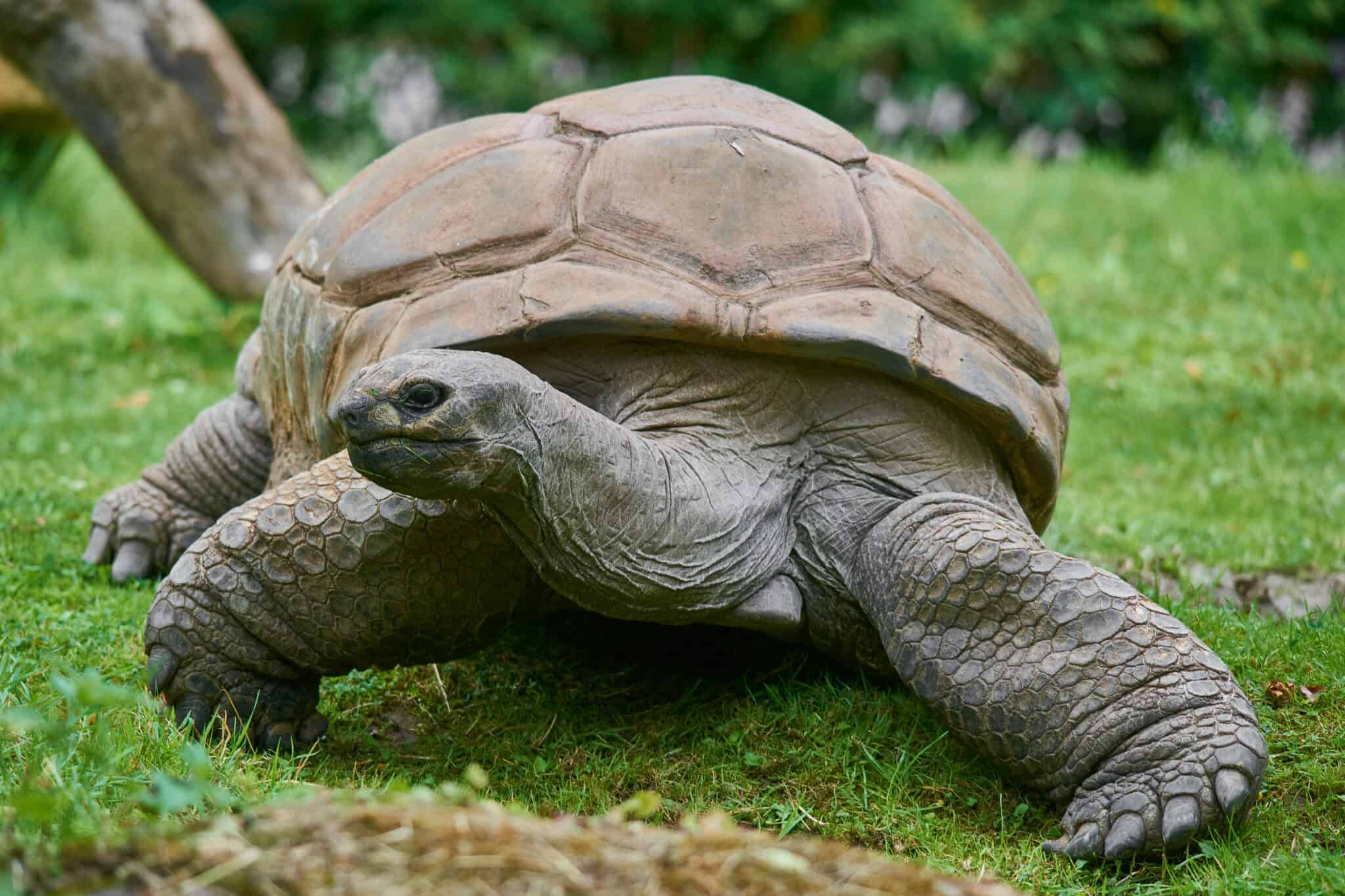
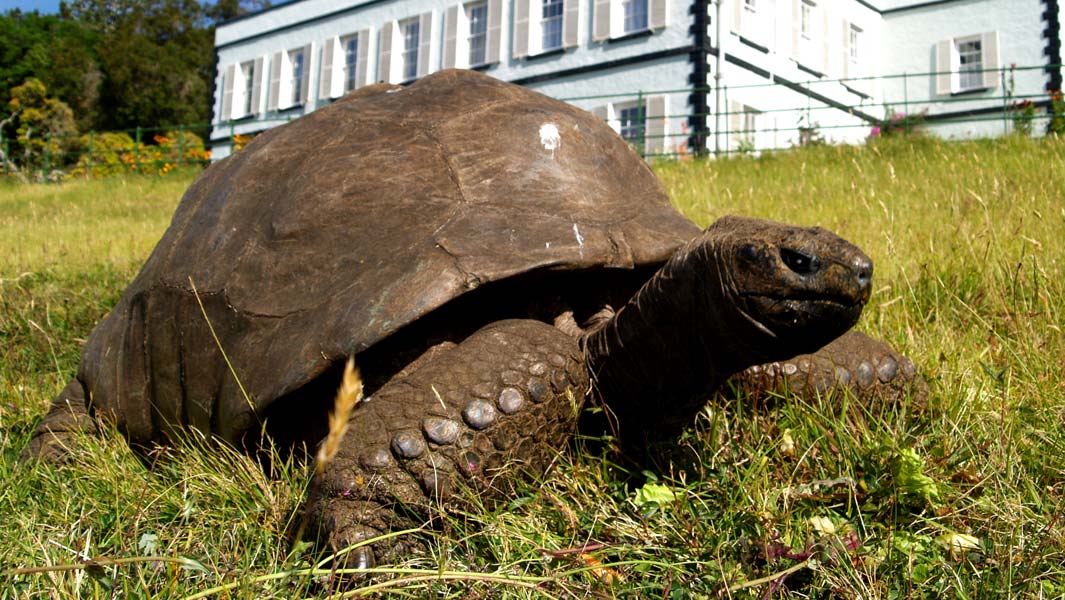
Not every ancient animal hides in deep oceans. Jonathan, a Seychelles giant tortoise (Aldabrachelys gigantea hololissa), holds the Guinness World Record for the oldest living terrestrial animal.
D.1. A Living History Book
As of 2026, Jonathan is approximately 194 years old. He was born around 1832, likely on the island of Seychelles. By comparison, the first photograph of a human was taken in 1826. Jonathan arrived on the island of Saint Helena in 1882 as a gift to the governor. Remarkably, photographs taken of him in 1886 show a fully mature tortoise. He has lived through 39 U.S. presidents, both World Wars, and the invention of the internet.
D.2. Current Health and Diet
Jonathan is blind from cataracts and has lost his sense of smell. However, he still has excellent hearing and a hearty appetite. His caretakers hand-feed him a nutritious diet of:
-
Carrots and cucumbers (softened)
-
Apples and bananas (chopped small)
-
Hay and fresh grass
-
Vitamin supplements and occasional hard-boiled eggs for protein
Despite his age, he still mates with other tortoises on the island—though he is too old to mount them without assistance.
D.3. Why Tortoises Live So Long
Giant tortoises possess several anti-aging adaptations:
-
Telomere maintenance: Their chromosomes do not shorten significantly with age.
-
Cancer resistance: They have extra copies of tumor-suppressing genes like p53.
-
Slow growth rate: They reach full size after 40-50 years.
-
Ectothermic metabolism: Not needing to generate body heat reduces metabolic wear.
E. Other Notable Ancient Animals
While Ming, the Greenland shark, and Jonathan are the most famous, several other species deserve honorable mention. The table below summarizes them:
| Animal | Species | Maximum Confirmed Age | Key Feature |
|---|---|---|---|
| Bowhead whale | Balaena mysticetus | 211 years | Thick blubber and slow heart rate |
| Koi fish (Hanako) | Cyprinus rubrofuscus | 226 years | Lived in Japan, died in 1977 |
| Tubeworm | Escarpia laminata | 300+ years | Deep-sea chemosynthetic environment |
| Sponge (Monorhaphis chuni) | Hexactinellid | 11,000+ years (theoretical) | But not confirmed living individual |
| Red sea urchin | Mesocentrotus franciscanus | 200+ years | Continuous growth without senescence |
E.1. Bowhead Whales: Arctic Giants
Bowhead whales were once thought to live 60-70 years. Then, in 2007, scientists found old stone harpoon tips embedded in living whales tips that hadn’t been used since the 1880s. Radiocarbon dating of eye lenses confirmed one male was 211 years old.
E.2. Hanako the Koi
Hanako (“Flower Girl”) was a scarlet koi fish in Japan. By counting growth rings on her scales—a rare method requiring the fish to be alive scientists confirmed she was 226 years old at her death in 1977. She was born in 1751, the same year the first volume of the Encyclopédie was published in France.
F. What Makes an Animal “Oldest Ever Found Alive”? Scientific Challenges
Determining the oldest animal ever found alive is fraught with difficulties. Here are the main obstacles:
A. Invasive dating methods: Most accurate techniques (shell ringing, ear bone sectioning, eye lens radiocarbon) require killing the animal. Thus, we often only know age after death.
B. Habitat inaccessibility: The longest-lived animals often live in deep ocean trenches or polar regions where observation is nearly impossible.
C. Growth ring accuracy: Some species produce irregular or false growth rings due to environmental stress, leading to over- or under-estimation.
D. Colonial vs. individual organisms: Animals like corals, sponges, or hydras can reproduce asexually and theoretically live indefinitely. For example, a giant barrel sponge in the Caribbean may be 2,300 years old, but because its cells constantly replace themselves, scientists debate whether it counts as the “same” individual animal.
E. Extreme outliers: Most records come from a single extraordinary specimen. For instance, Ming the clam’s species typically lives 200-300 years. Ming was an outlier due to exceptionally lucky genetics.
G. Implications for Human Longevity and Anti-Aging Science
Why should we care about the oldest animal ever found alive? Because their biology holds secrets that could extend human healthspan.
G.1. Lessons from Ming the Clam
Researchers have sequenced the ocean quahog genome. They found:
-
Duplicated antioxidant genes that neutralize cellular damage.
-
High expression of autophagy-related genes that recycle damaged cell components.
-
Unusual protein folding machinery that prevents age-related misfolding diseases like Alzheimer’s.
G.2. Lessons from Greenland Sharks
The shark’s TMAO adaptation is being studied for organ preservation. TMAO stabilizes proteins at high pressure and cold temperatures. Synthetic TMAO-like compounds could help preserve human transplant organs for longer periods.
G.3. Lessons from Giant Tortoises
Seychelles and Galápagos tortoises have shown that cancer rarely kills them, despite their large size and long lives. Researchers are now studying tortoise p53 genes to develop new cancer therapies for humans.
H. Threats to Ancient Animals Today
Ironically, many of the oldest animals ever found are now vulnerable to extinction. Human activities pose severe risks:
A. Climate change: Warming oceans disrupt the feeding grounds of Greenland sharks and ocean quahogs. Warmer water increases metabolism, which may shorten lifespan.
B. Deep-sea mining: Destroys sponge and clam habitats before scientists can study them.
C. Overfishing: Bowhead whales were nearly driven extinct by commercial whaling. Only protective laws allowed their populations to recover.
D. Plastic pollution: Microplastics accumulate in filter feeders like clams, causing digestive blockages and inflammatory stress.
E. Illegal pet trade: Giant tortoises are poached for their meat and shells. Jonathan’s species is classified as vulnerable.
I. Ethical Considerations: Should We Seek Out the Oldest?
The story of Ming the clam raises a troubling question: is it ethical to kill an ancient animal just to know its age? Most modern scientists say no. Today, researchers use:
-
Non-lethal sampling: Drawing small tissue biopsies instead of prying open shells.
-
Indirect modeling: Using size and growth curves to estimate age without killing.
-
Resurrection of historical data: Re-analyzing previously collected specimens rather than harvesting new ones.
The scientific community now prioritizes conservation over record-breaking. The goal is to protect these living time capsules, not sacrifice them for a number.
 J. Conclusion: The Oldest Animal Is Still Alive Somewhere
So, what is the oldest animal ever found alive? If we require exact, uncontested proof, it is Ming the ocean quahog clam at 507 years. If we include statistical estimates, a 512-year-old Greenland shark takes the crown. And if we consider terrestrial animals, Jonathan the tortoise is the current champion at 194 years and still going strong.
But here is the fascinating truth: somewhere in the deep North Atlantic, there is likely an even older animal swimming or burrowing right now. We have only explored 20% of the ocean floor. Every year, researchers discover new deep-sea species with extraordinary lifespans. The record could be broken at any moment.
What these animals teach us is that aging is not a fixed inevitability. It is a biological process that evolution has shaped differently in every lineage. By respecting and studying the oldest animal ever found alive, we learn not only about their past but also about the future of longevity—for them, and perhaps one day, for us.
Summary of Key Takeaways
-
Ming the clam (507 years) is the verified oldest individual animal ever found.
-
Greenland sharks may live up to 512 years, making them the oldest vertebrates.
-
Jonathan the tortoise (194 years) is the oldest living land animal.
-
Bowhead whales (211 years) and koi fish (226 years) are other notable examples.
-
Longevity adaptations include slow metabolism, efficient DNA repair, and cancer resistance.
-
Human activities like climate change and overfishing threaten these ancient creatures.
-
Ethical research now avoids killing animals to determine their age.
Thank you for reading this comprehensive guide. If you found it valuable, share it with someone who loves nature, science, or the fascinating mystery of time itself.